Plank-First: Why Sulawesi Shipwrights Build the Hull Before the Frame
Shipyard Journal 1 min read
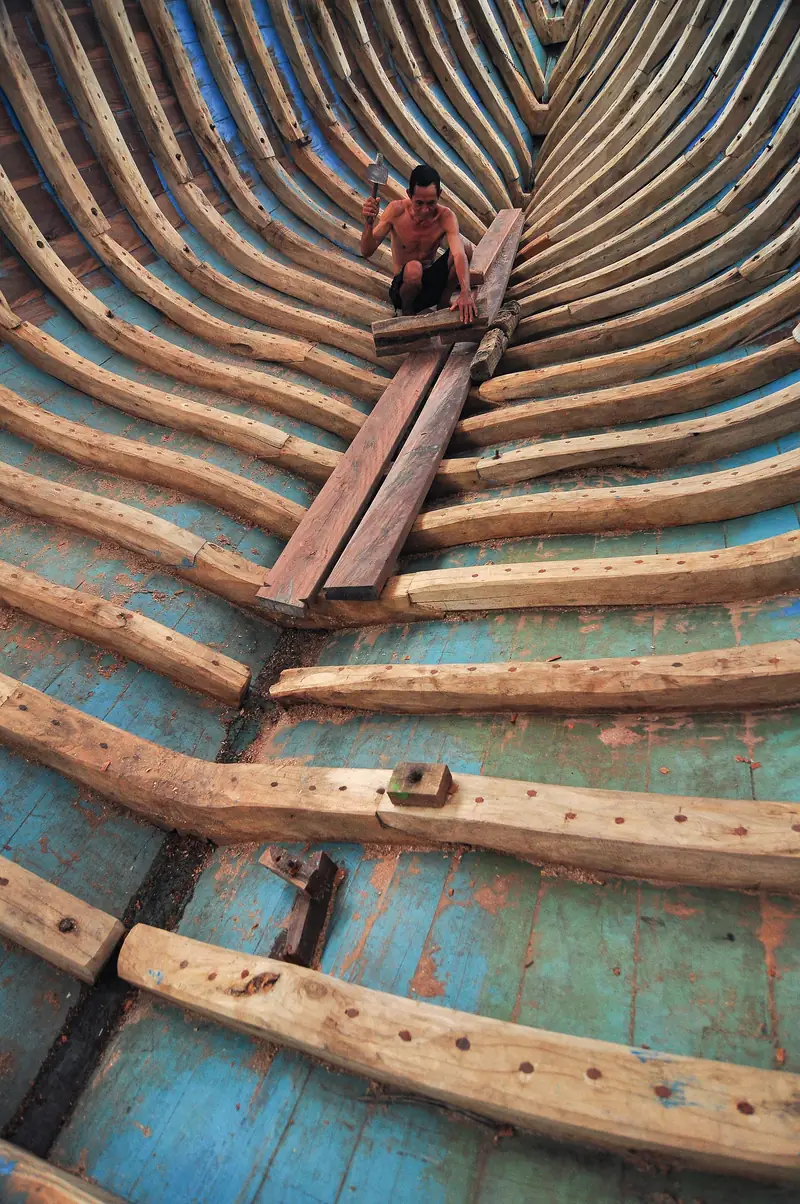
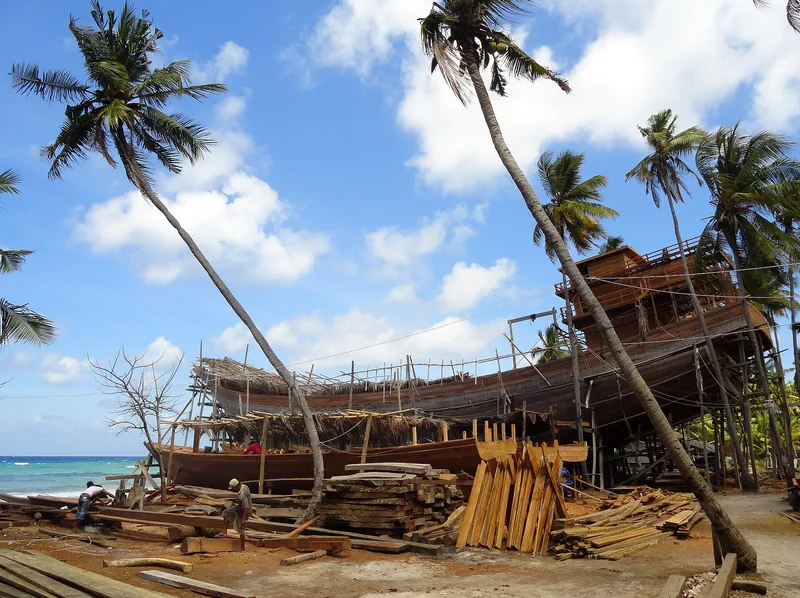
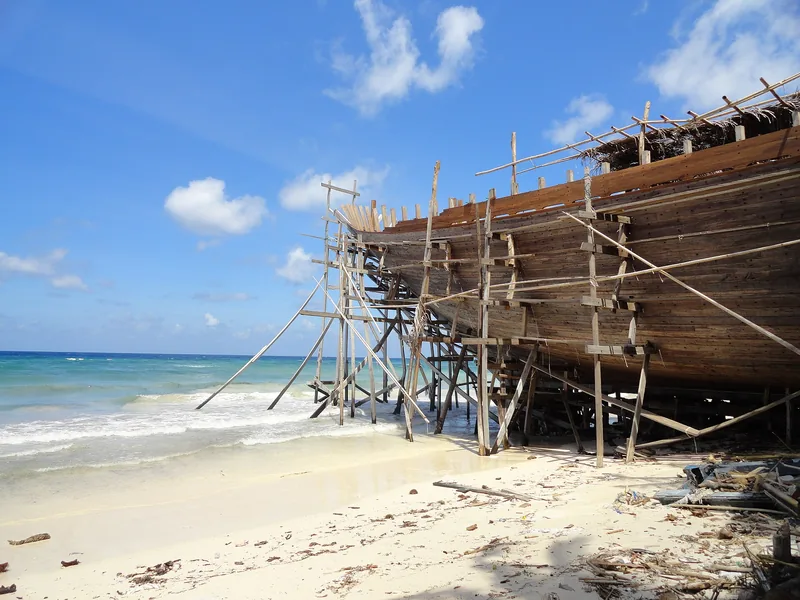
In most Western wooden boatbuilding, the frames go up first and the planking follows. In South Sulawesi it is the other way round: the hull skin is raised first and the frames are fitted inside the finished shell. This plank-first method is the defining craft of the Konjo and Bugis shipwrights.
Shape found by eye
Without a frame to hang the planks on, the builder finds the hull’s shape by eye and batten, plank by edge-fastened plank. It demands a master’s judgement — a panrita lopi reads the timber and knows where a plank wants to lie. The reward is a fair, continuous hull whose shape lives in the shell itself.
Dowels, not nails
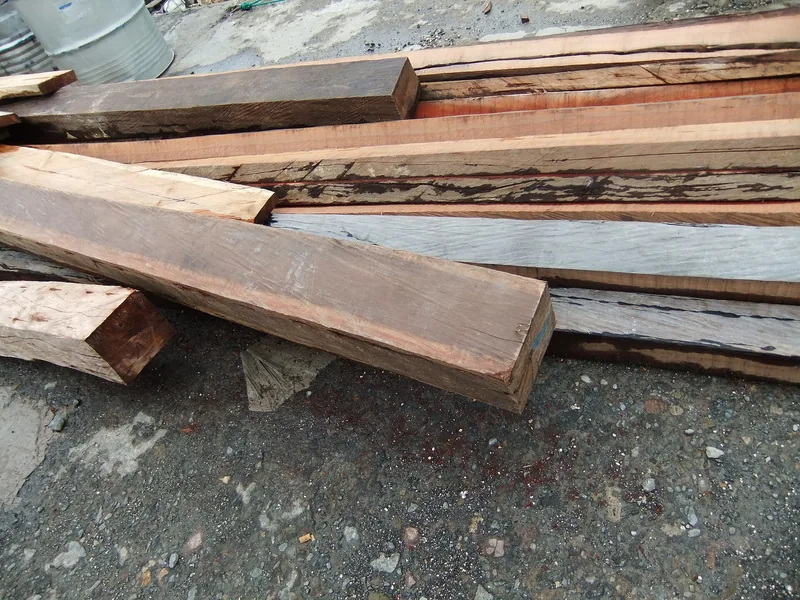
Seams are locked with hardwood dowel pegs driven into drilled holes, not iron nails that would rust and split the wood. The result is a hull fastened entirely in timber and bronze, which is one reason a well-built phinisi lasts so long.
Why it still matters
Plank-first belongs to the living boatbuilding tradition of South Sulawesi. Its use in a particular vessel should be discussed with the named shipwrights, designer and technical reviewers; heritage alone does not establish a structural or condition finding.
See the method in practice on our wooden-boat construction page and the culture behind it on Butta Panrita Lopi.
Discuss your project with the desk using the existing contact links. Estimates follow an agreed scope, with currency and exclusions stated in the written proposal. Related: +62 811-3823-875 · sales@komodoluxury.com.
Straight answers
Frequently asked
What is plank-first boatbuilding?
A method where the hull skin is raised and faired before the internal frames are fitted, with seams locked by hardwood dowels. It is the defining craft of South Sulawesi shipwrights.
Why don’t Sulawesi builders use nails?
Iron nails rust and split timber. Phinisi hulls are fastened with hardwood dowels and bronze, which is part of why a well-built hull lasts for decades.